Olay Packaging Experience
Client: Procter & Gamble
UNDER NDA
Role:
Project Manager,
Product Experience Designer
Duration:
Sep 2025- Dec 2025
Responsibilities:
User Research & Testing
Industrial Design
CAD & Mechanics
Too Much Prototyping
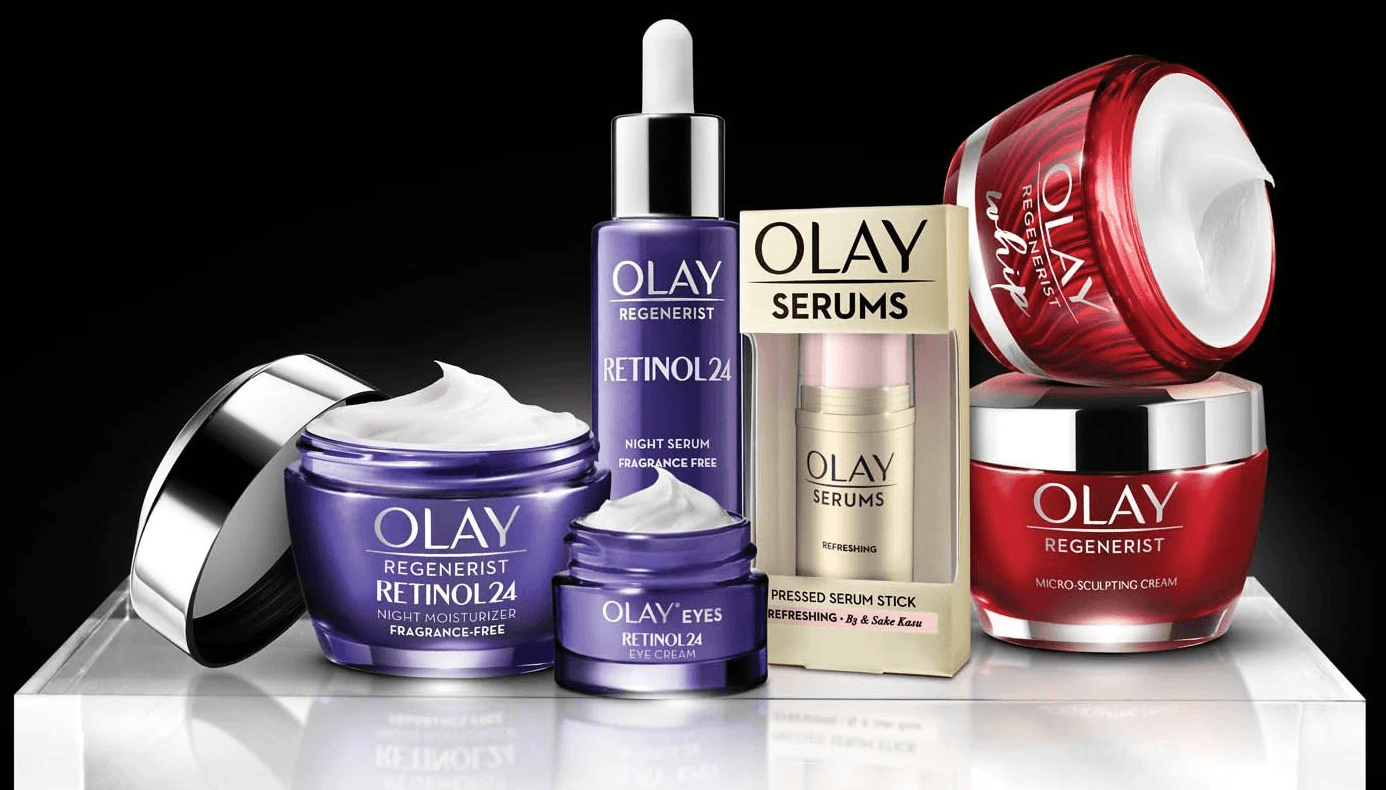
Project goal:
Olay would like to increase the user reception, talkability, and perceived sustainability of certain products. They asked us to redesign the overall packaging experience to better reflect their values and align with the consumers' expectations, while still considering the current manufacturing constraints.
Project outcome:
Following multiple rounds of consumer interviews and user testing, we presented three final design prototypes, ranging from something that would be manufacturable with the current manufacturing process to an ideal package that may be slightly beyond current capabilities.
*Pictures blurred for privacy and NDA
In-Home Visits
Conducted 2 rounds of interviews with 8 users of Olay and competitor products in their own homes
Improved understanding of users based on what they say they do and what they actually do
Added context and depth to secondary research and initial hypotheses

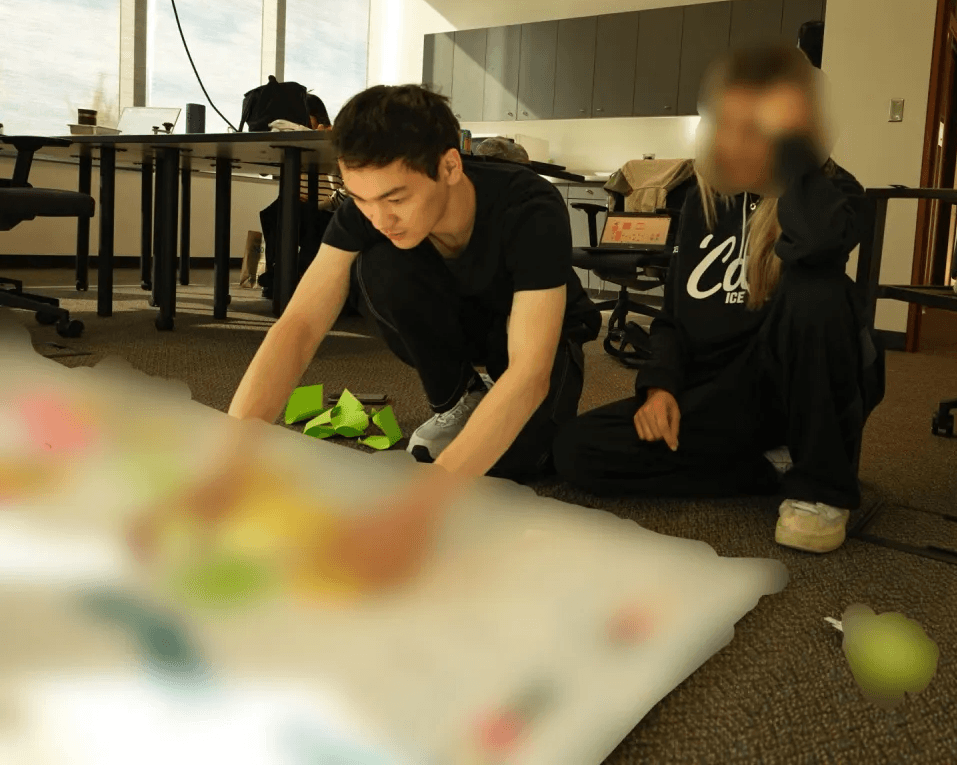
Synthesized research to uncover themes, tensions, pain points, and insights
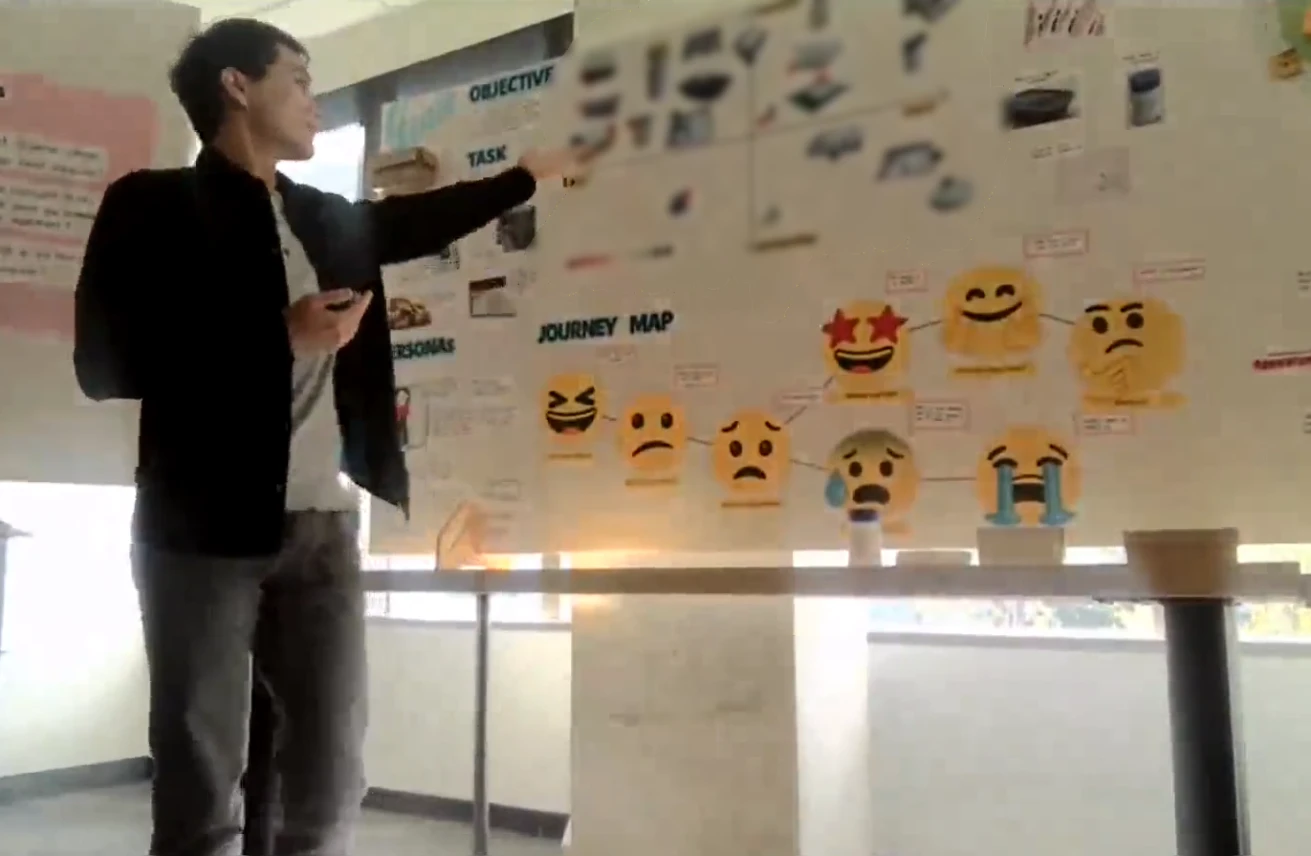
Created personas and journey maps
Generated "how might we" questions to drive our direction and goals
Central Site Visits
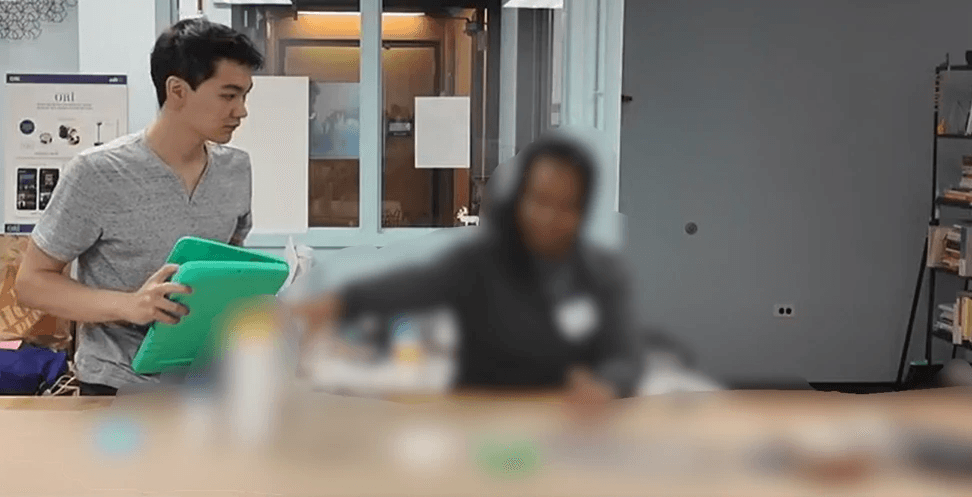
Invited 8 users to campus for interactive interviews and research
Performed three rounds of tasks such as ranking and sorting activities with various relevant items and stimuli to understand how users perceive different elements and design concepts
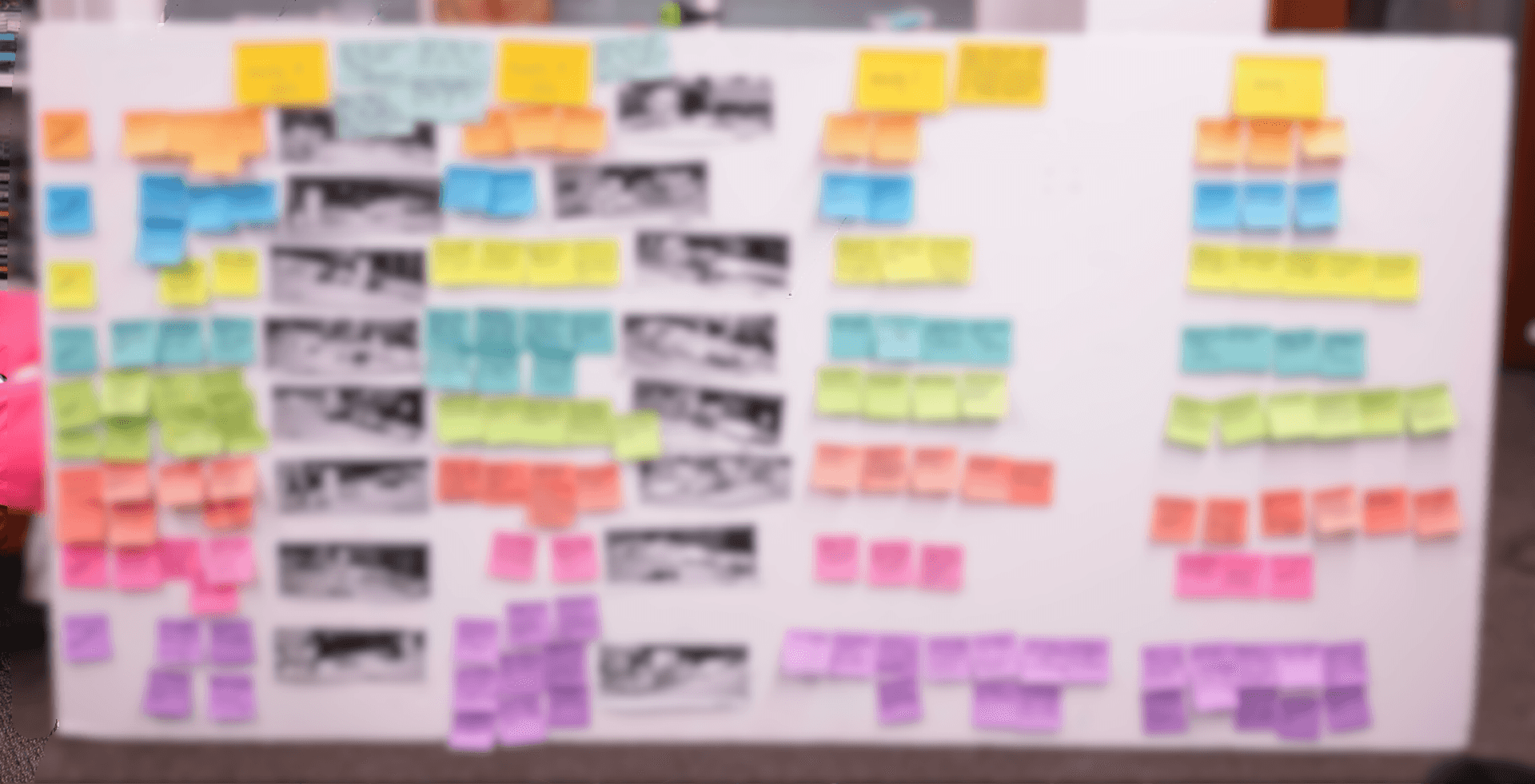
Brainstormed solutions to address pain points discovered through previous research and testing
Ideated future directions based on key takeaways
Utilized learnings from testing to create low fidelity prototypes with various components responding to our insights and "how might we" questions
Presented most important findings and future plans to P&G client team to receive feedback on direction and goals
Moving Towards Final
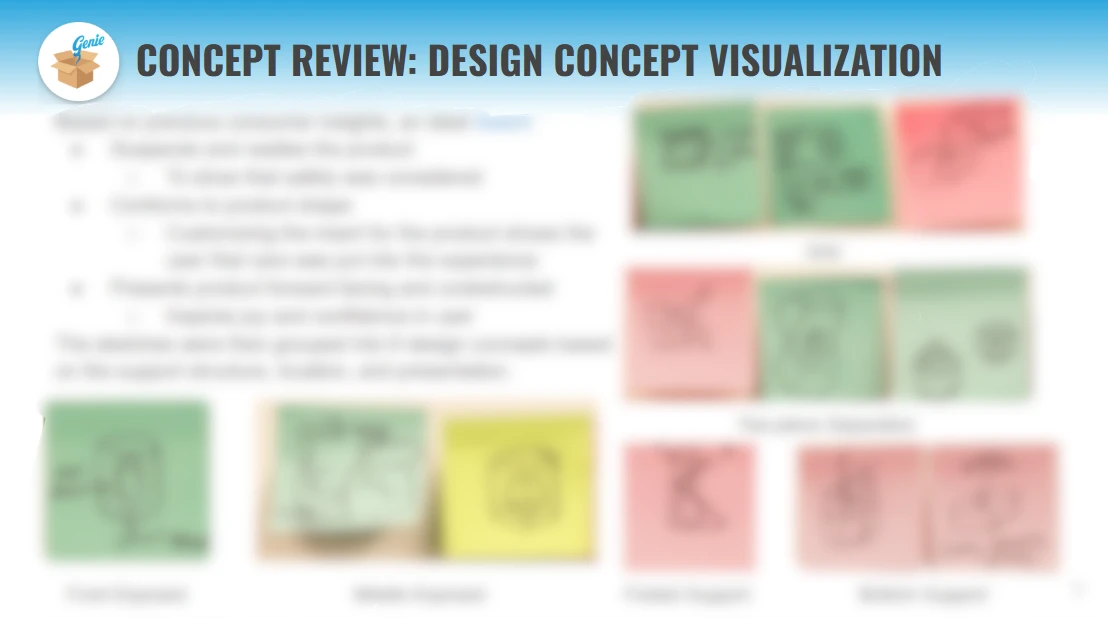
Following 24 1-hour sessions of user research and testing, we started moving towards final prototypes
We prepared a set of 4-8 iterations of new or refined prototypes each week, presenting 3 rounds of design reviews to professors and peers to get feedback on ideas.
We had received materials and specifications from Olay on the current product and design, as well as specifications on the manufacturing capability.
We knew that Olay preferred to have a design that would work with the current manufacturing setup, and considered this throughout the design process.
Step, Stretch, Leap
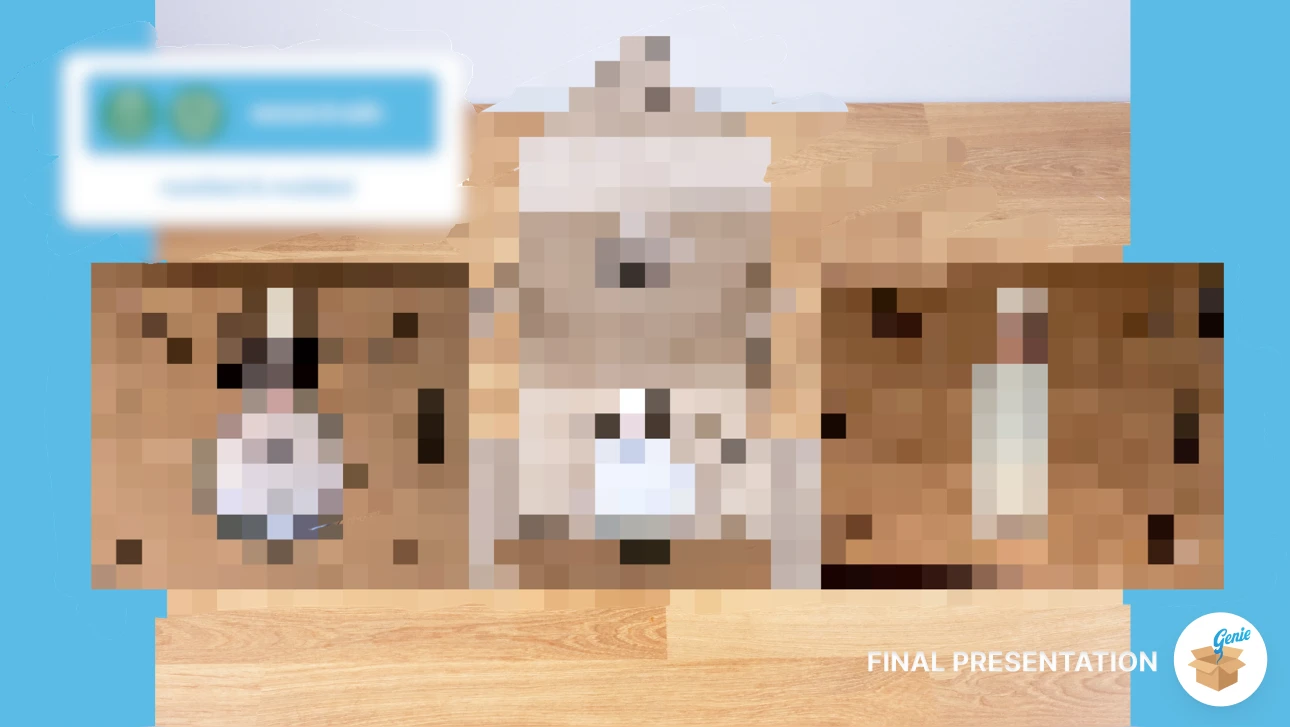
For our final deliverable, we were asked to consider stretch, step, and leap prototypes, ranging from something that would be manufacturable with the current manufacturing process, to the best prototype without the need to consider manufacturing capabilities.
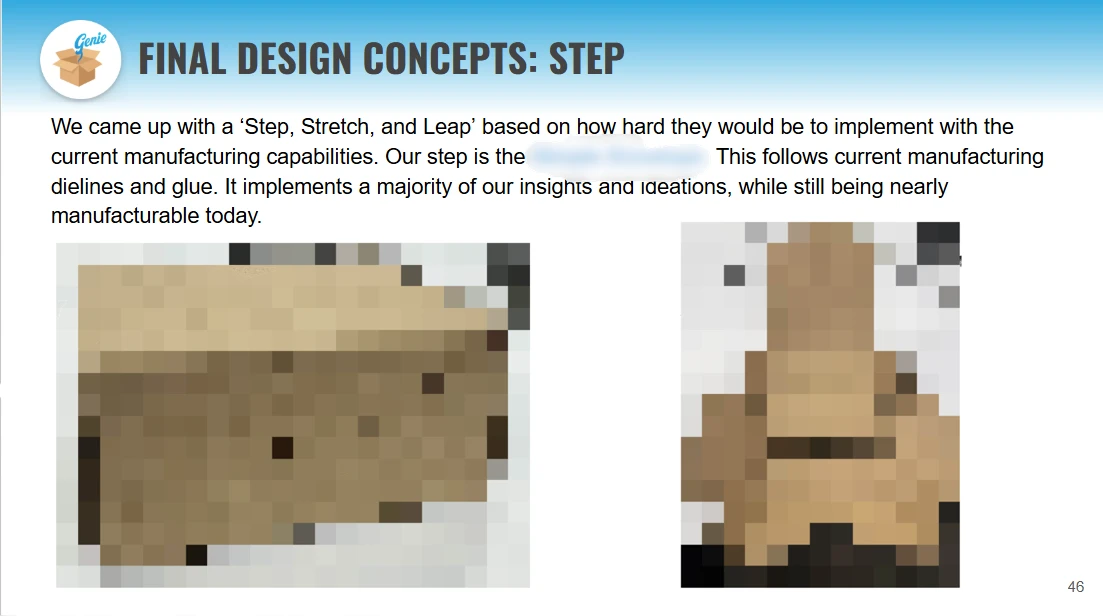
Our step prototype used the exact same manufacturing process and steps as the current packaging to allow it to work with the current process.
Out of the 13 final design requirements stemming from our research, this prototype fully met 10— although it may have met the final 3, this would not be confirmable without more advanced testing.
Compared to the original Olay packaging which met only 4 of our final design requirements, this was a substantial improvement.
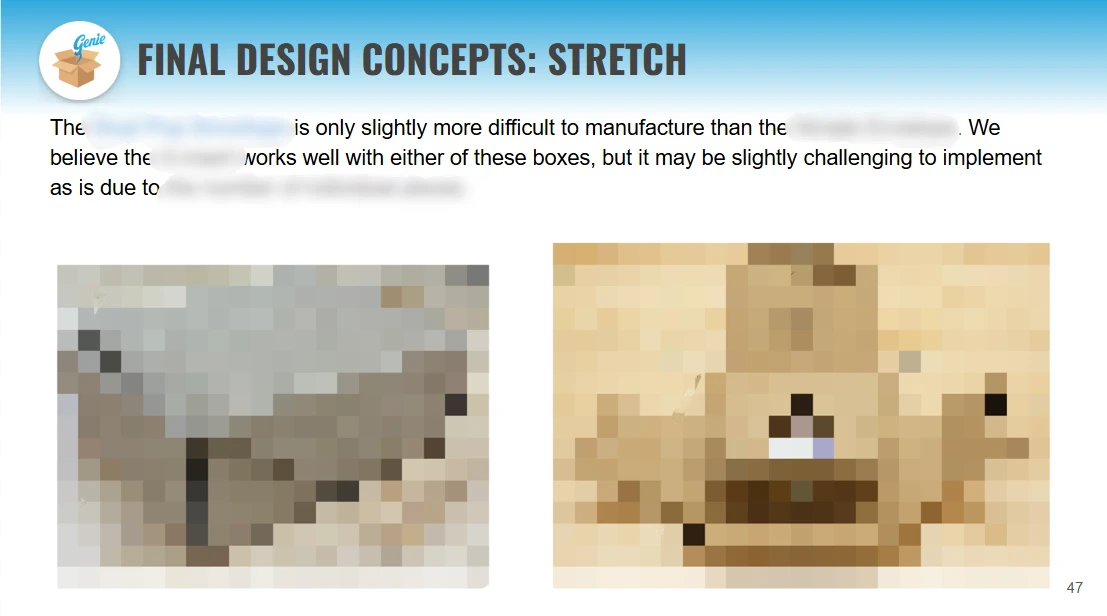
Our stretch prototype looked very similar to our step prototype, and followed the exact same manufacturing process, but we added an additional small step: an additional adhesive placement.
This small change, which even manually would only take a few seconds additional time, allowed us to completely change the structure of the packaging.
This prototype met 11 of our final requirements, and likely met the last 2, although this again would require testing we could not do.
It also was likely more structurally sturdy, although this also could not be tested without advanced simulations.
Finally, our leap prototype was a direct iteration of the stretch, meeting the same requirements.
However, this prototype also elicited a more immediate and instinctive sense of delight that was difficult to measure with just design requirements.
This prototype also reduced material usage by 10-15%, and additionally reduced complexity, going from 6 individual parts to just 2.
While this prototype did minorly increase assembly complexity, we ensured it would require little or no modification to any existing automatic processes, though it would likely minorly complicate any manual processes. This being said, we do believe that this design could be easily created and packaged with a fully automatic process in the future.