Redesigning Injection Molding
Client: Northwestern University's Advanced Intelligent Manufacturing Laboratory
Role:
Project Manager,
Industrial Design Engineer
Duration:
Jan 2025-Jun 2025
Responsibilities:
System Design & Usability
CAD, FEA, CAM
Testing & Validation
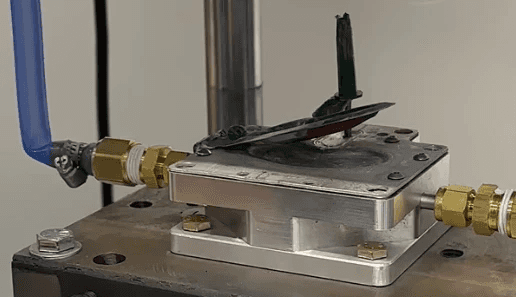
Project goal:
Molds are time-consuming and expensive to create, and are re-made from scratch for any testing or iteration. The client believes we can make the process more efficient using a sheet aluminum mold instead of a full mold block, but it quickly deforms under injection molding pressure.
Project outcome:
We successfully created a molding system using 0.4 mm sheet aluminum liner to inform part geometry. A reusable pewter backing supported the aluminum to maintain shape, and cooling and ejection systems were created to adapt to different shaped geometries. Our injection molding system produced parts within the desired tolerances, reducing mold manufacturing time and cost by estimated 60-70% compared to traditional molds.
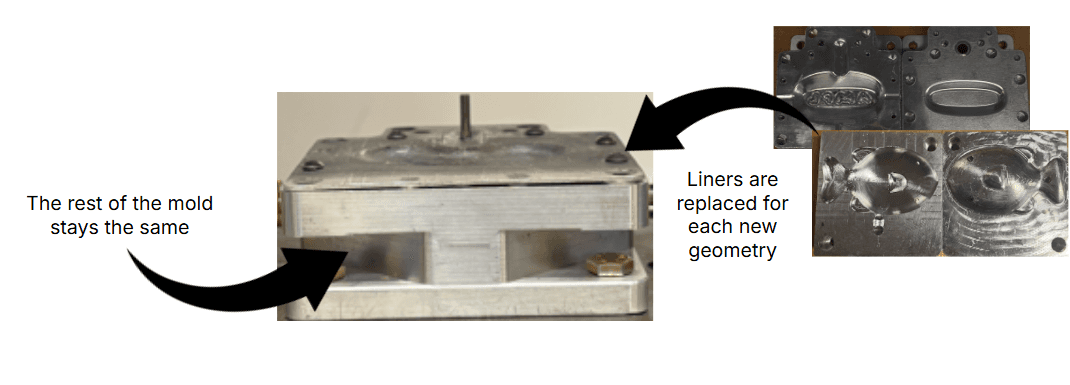
How might we create an adaptive molding system that allows us to support aluminum liners of different geometry while meeting industrial injection molding standards?
We divided our system into 3 subsystems
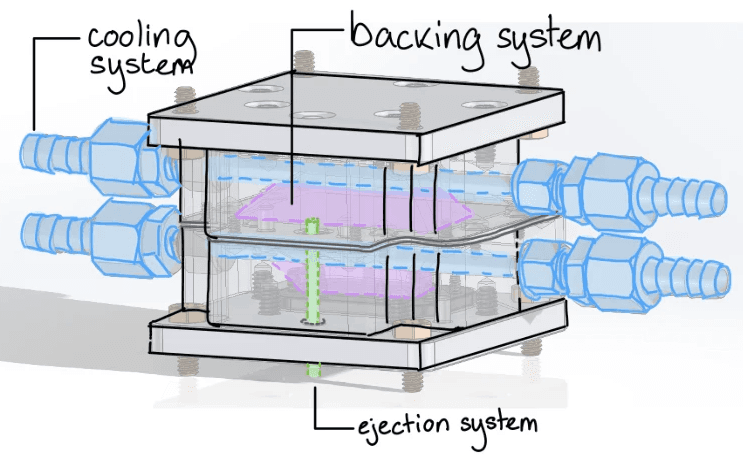
System in context
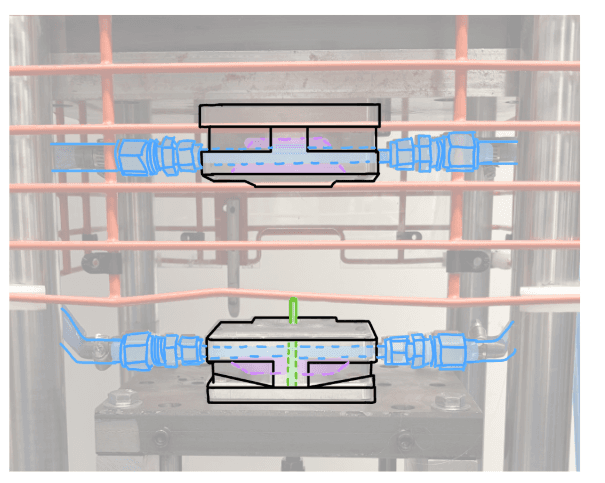
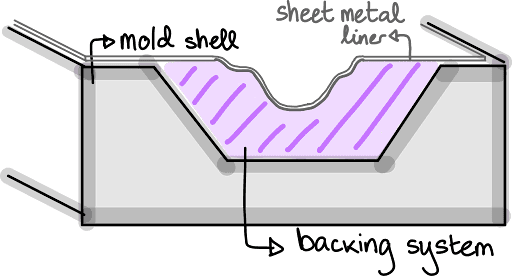
Backing System
Prevents the aluminum liner from deforming
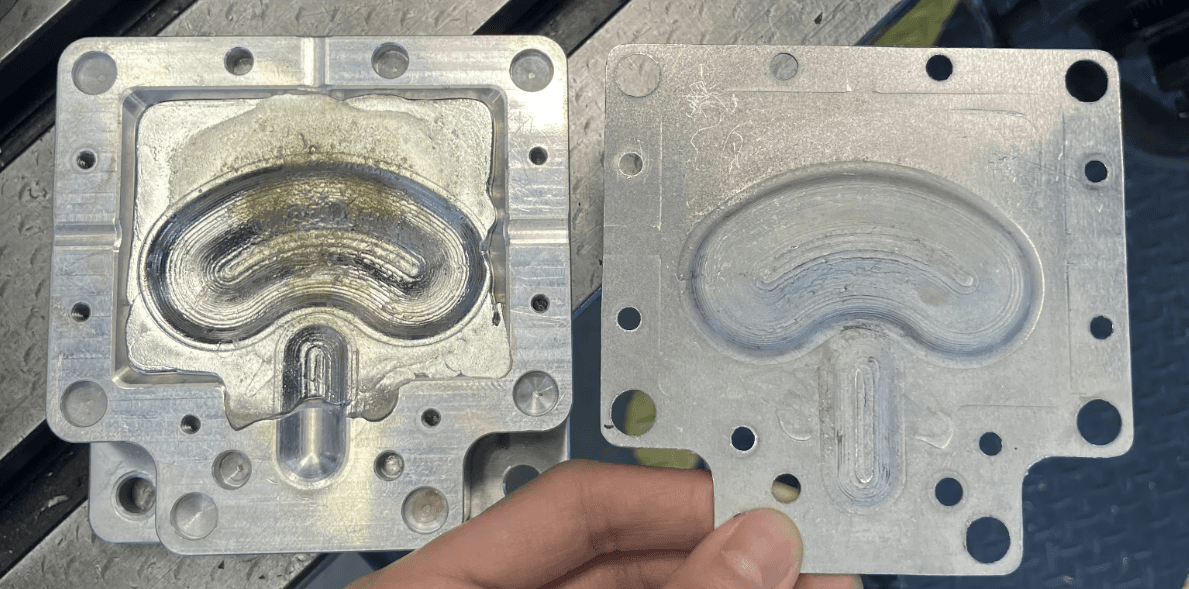
Pewter is cast to the shape of the liner, acting as a solid metal block

Pewter can be melted and recast to adapt to different liners
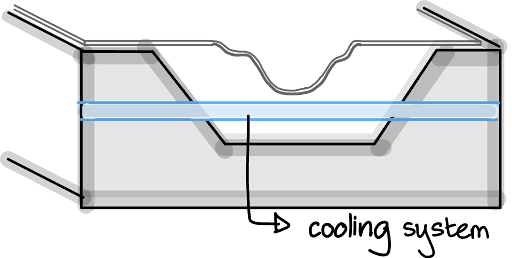
Cooling System
Keeps the part within desired temperature while casting, mitigating defects
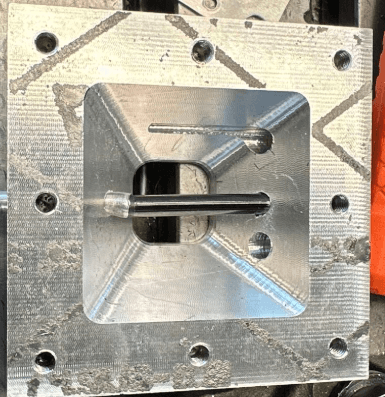
Cooling pipe can be removed horizontally to extract the pewter backing
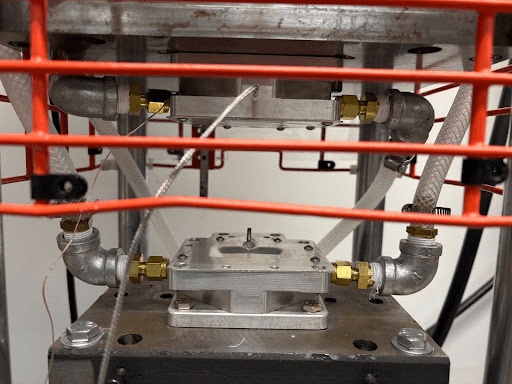
Cool water flows through the pipes at an adjustable flow rate to control the temperature
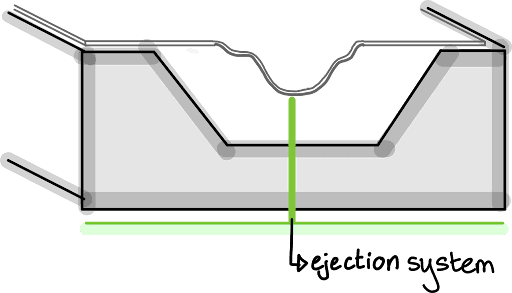
Ejection System
Allows part to be removed quickly and easily
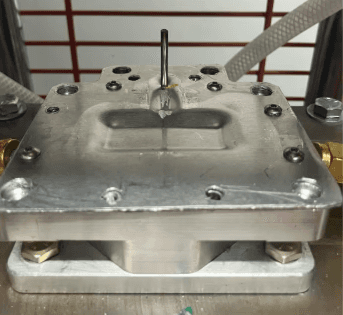
Simple pin uses friction to grab the part, then retracts

Part is automatically ejected in 2 seconds
Designing with Adaptability in Mind
We split the project into 3 subsystems, for the support structure, cooling, and ejection. We worked on ideating and designing each subsystem to meet the requirements we created for those systems, but we didn’t fully consider how design decisions in one area affected the others.
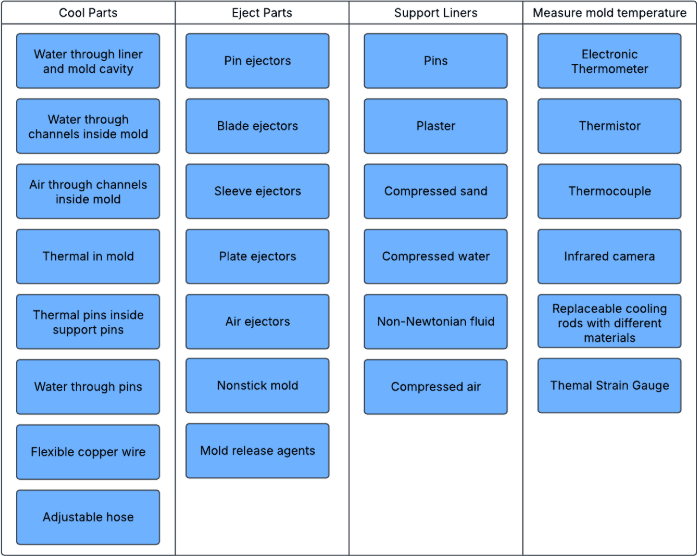
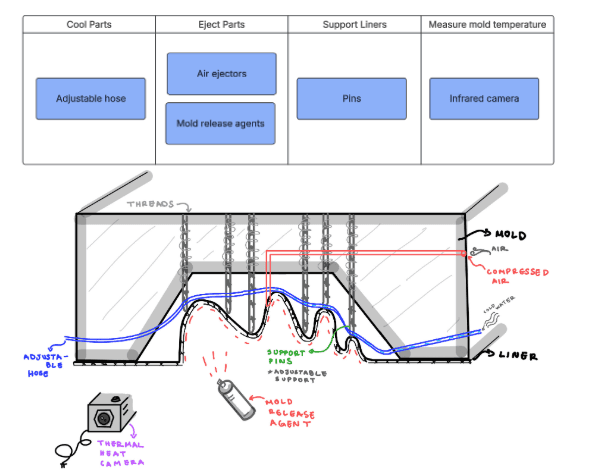
When we began prototyping subsystem designs, we discovered conflicts between the systems: backing pin systems cut off routes for cooling channels and ejection methods, and cooling mechanisms interfered with extracting castable backing.
Instead of using quick patches, we took it as an opportunity to pivot. I facilitated conversations between the subsystem teams to clarify what aspects of each subsystem were the most vital, as well as the goals and reasoning behind each design decision. We prioritized designs in order of dependency, which allowed us to plan our systems around each other in a way that let them all function in any combination.
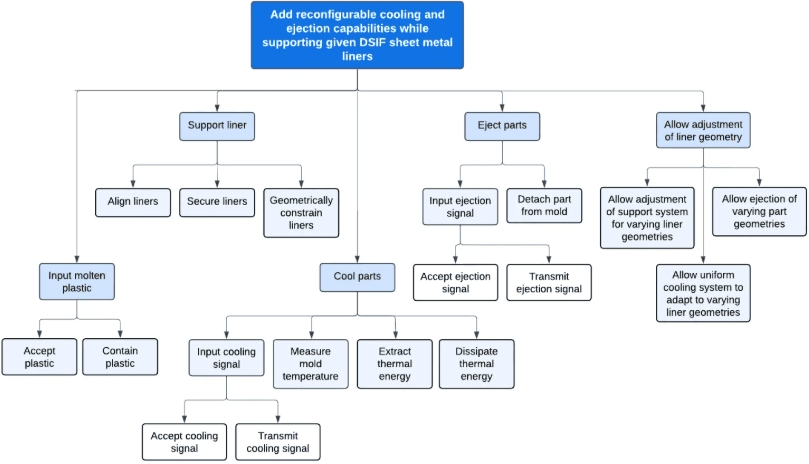
This experience taught me the importance of not only teamwide communication and ensuring all parts of the project are aligned and cohesive, but also designing with plans for flexibility and adaptability. Now, I build adaptability into my design process by identifying potential risk points early and structuring designs so they can be modified and adapted without starting from scratch.